
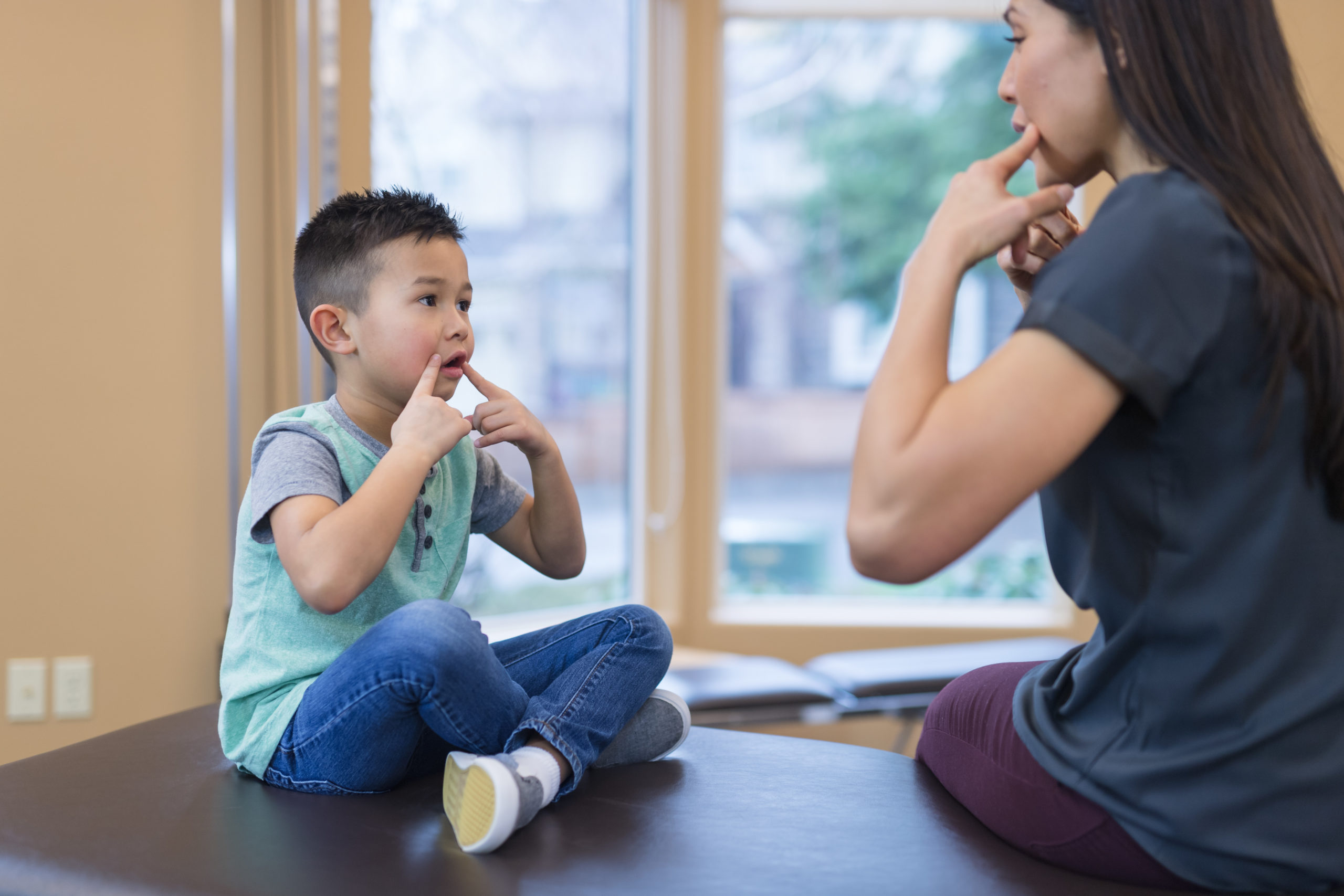
Play precedes language, so up until age 7, our children learn language best through play and hands-on activities. This may involve various levels of play that target all of the senses. Children also learn best through language concepts they can experience. Here are just a few ideas:
- Model language within pretend play: Use descriptive language as well as naming objects in play: “The car is going up. Up, up the ramp.” Use playful language, sounds, and nonsense words in early language play (honk, beep, weee, moo, choo-choo, chug-chug).
- Hands on language–Messy play, outside play: use descriptive words they can experience such as /wet, hard, soft, sticky, squishy, hot, cold, loud, soft, light, dark, etc./
- Activities that encourage cooperation, social interactions, turn taking, scaffolding, etc.: Popping bubbles together (using hands, feet, etc.), building with blocks together, taking turns with a puzzle, making things with playdough, drawing together on a paper, etc. Use interactive language and eye contact throughout these interactions.
Toys to encourage language, play, interactions:
- Toy farm: Model animal sounds, tractor sounds, animal actions, pretend play, etc.
- Mr. Potato Head: Talk about body parts, take turns finding a named piece from a group of pieces, have Mr. Potato Head engage in various actions (jumping, sleeping, eating), following directions with Mr. Potato Head, etc.
- Bubbles: Model interactive language like “pop” “wet” “more” “up”; model actions with bubbles such as popping, stomping with feet, blowing; talk about body parts and label: “I just popped the bubble with my nose/finger/knee/foot.”
- Playdough: Model language and actions: cutting, squeezing, squishing; name shapes you create in the playdough, make pretend “food,” etc.
- Pretend food: Model pretend food-play and name actions (e.g., stirring, cutting, cooking, etc.), foods, descriptors for certain foods (“Oo, this tea is hot!” or “This apple is crunchy”), pretend play with feeding toys/dolls/animals, sorting foods, etc.
- Blocks/Legos: Target parallel play (playing side by side building structures) and also target taking turns and playing together to build 1 structure. Model language throughout this interaction. Can clean up blocks/Legos together modeling the phrase “put in” for putting them back in the bin/box/container.
Colleen Nolan, CCC, SLP
Comments